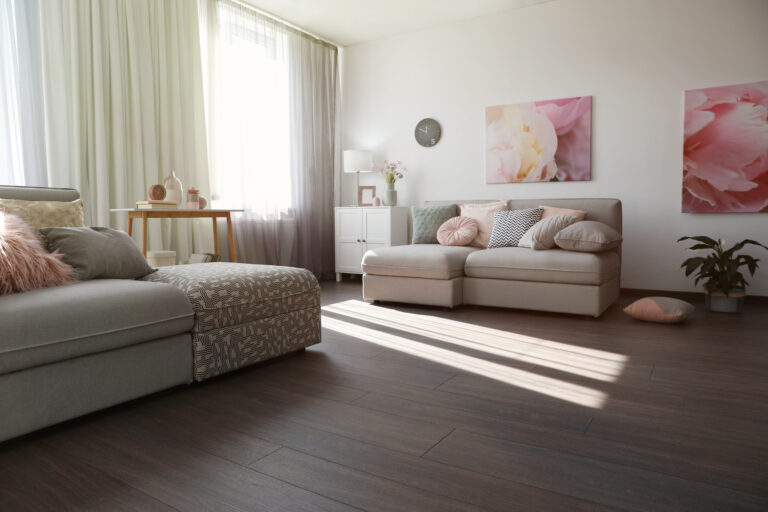
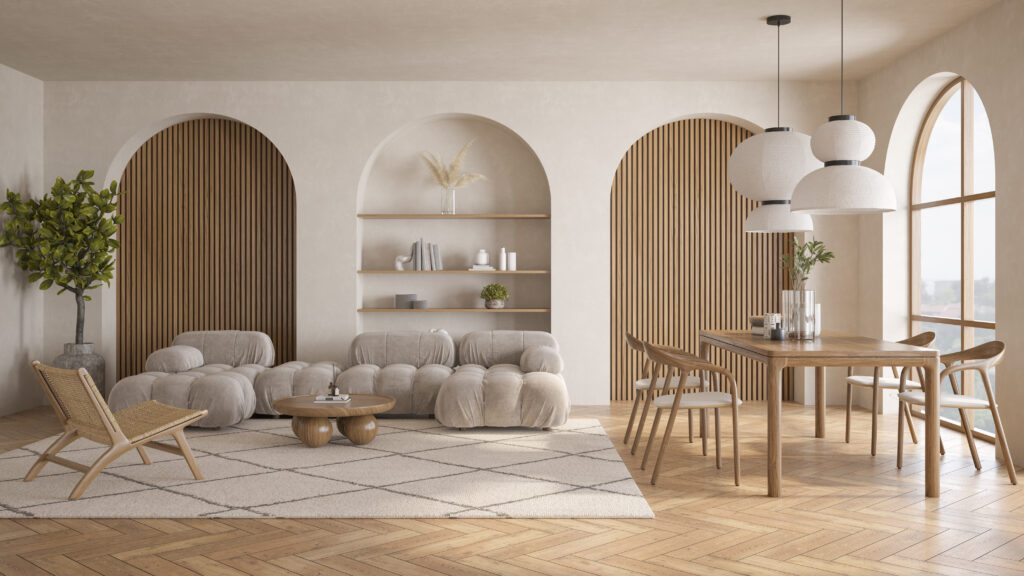
Herringbone flooring already brings detail into a room, so the colours around it matter. Furniture, wall paint, rugs and cabinetry can either help the floor feel balanced or make the whole space feel busier than expected.
The aim is not to match everything perfectly. It is about creating a room where the flooring, furniture and wall colours feel like they belong together. If you want to match herringbone flooring with furniture and wall colours, start by looking at the tone of the timber and the amount of pattern already in the space.
Start With the Timber Tone
Before choosing wall colours or furniture, look closely at the floor itself. Some oak floors feel warm and golden, while others are pale, neutral, grey-toned or deeper in colour.
A warm oak floor usually works well with soft whites, beige, warm greys, muted greens and natural fabrics. Cooler timber tones may sit better with crisp whites, stone colours, charcoal accents or cleaner modern finishes. Deeper oak can work beautifully with lighter walls, so the space does not feel too heavy.
The floor should guide the palette rather than compete with it.
Keep Wall Colours Calm
Because herringbone has a strong pattern, calm wall colours often work best. This does not mean the walls need to be plain white, but they should give the floor enough room to stand out.
Soft neutrals, warm whites, gentle greys and muted earthy tones can help the room feel settled. If the walls are too bright or busy, the space may feel crowded, especially in smaller rooms.
A simple wall colour can make the floor feel intentional rather than overwhelming.
Use Furniture to Balance the Pattern
Furniture can either soften the floor pattern or make it feel more intense. Large pieces such as sofas, dining tables, beds and sideboards help break up the pattern and give the eye somewhere to rest.
If the floor has a lot of movement, choose furniture with simple shapes and clean lines. If the timber is pale and subtle, you may have more room to introduce texture through fabric, leather, stone or timber furniture.
The goal is to create balance, not to cover the floor completely.
Avoid Too Many Competing Timber Tones
Timber furniture can look beautiful with herringbone flooring, but too many different wood tones can make the room feel mismatched.
The colours do not need to be identical. In fact, a slight contrast often looks better than trying to match the floor exactly. A natural oak floor may pair well with walnut accents, black timber, whitewashed finishes or painted cabinetry.
What matters is that the undertones work together. Warm timber usually pairs better with other warm finishes, while cooler flooring often suits cooler or more neutral furniture tones.
Add Rugs With Care
Rugs can help soften a room, especially in living areas, bedrooms and open plan spaces. They can also create clear zones without hiding the floor completely.
When choosing a rug, think about how much pattern is already in the room. Since the floor has its own design, a plain or lightly textured rug may work better than something very busy. Natural fibres, muted colours and simple patterns can add warmth without fighting the herringbone layout.
A rug should frame the space while still letting parts of the floor show.
Match the Mood of the Room
Not every room needs the same level of contrast. A dining room can often handle deeper furniture or stronger wall colours, especially if you want it to feel a little more formal. A living room, on the other hand, may feel better with softer colours, comfortable textures and a more relaxed look.
Bedrooms often work well with calming colours, soft fabrics and simple furniture. Entryways can handle a little more contrast because they are transition spaces rather than rooms where people sit for long periods.
Thinking about the mood of each room can make the colour choices feel more natural.
Use Contrast in Small Amounts
Contrast can help a herringbone floor feel fresh and modern, but it does not need to dominate the room. Black metal legs, darker handles, stone benchtops, deep cushions or framed artwork can add structure without making the space feel too heavy.
If the floor is light, a few darker details can ground the room. If the timber is darker, lighter furniture and walls can keep the space open.
Small contrasts often work better than strong contrasts everywhere.
Think About Natural Light
Natural light changes how both timber and wall colours appear. A room with plenty of sunlight may make warm oak feel more golden, while a darker room may make cooler tones feel flat.
Before choosing paint or large furniture pieces, check how the floor looks throughout the day. Morning light, afternoon light and artificial lighting can all change the mood of the room.
This is especially useful when choosing oak flooring and wall colours for living areas or open plan spaces.
Keep the Whole Home Connected
If herringbone flooring runs through several rooms, the surrounding colours should feel connected. The furniture does not need to match in every space, but there should be some consistency in undertones, finishes or colour direction.
For example, you might use warm whites throughout the home, then vary the furniture and rugs by room. Or you might keep a consistent timber and metal finish so each area feels related.
This helps the floor become part of the home’s overall style rather than a separate feature in each room.
When to Keep Things Simple
Herringbone flooring already adds movement, so simple styling often works best. A calm wall colour, well-chosen furniture and a few textured pieces can be enough.
For homeowners exploring herringbone timber flooring in Melbourne, it helps to think beyond the floor sample and imagine the full room. The best result usually comes from choosing colours and furniture that let the floor add character without taking over the space.
A Practical Takeaway
Getting herringbone flooring to work with the rest of the room comes down to balance. The timber tone, wall colour, furniture style, rugs, contrast and natural light all play a part in whether the space feels calm, warm, busy or well put together.
Smarter Timber Flooring helps Melbourne homeowners explore timber flooring options that suit their interiors, lifestyle and design goals. With the right surrounding colours and finishes, herringbone flooring can feel warm, considered and easy to live with.